Loading...
Planning a garage, addition, or new structure? A properly built slab starts with the right base prep, reinforcement, and curing - not just the pour.
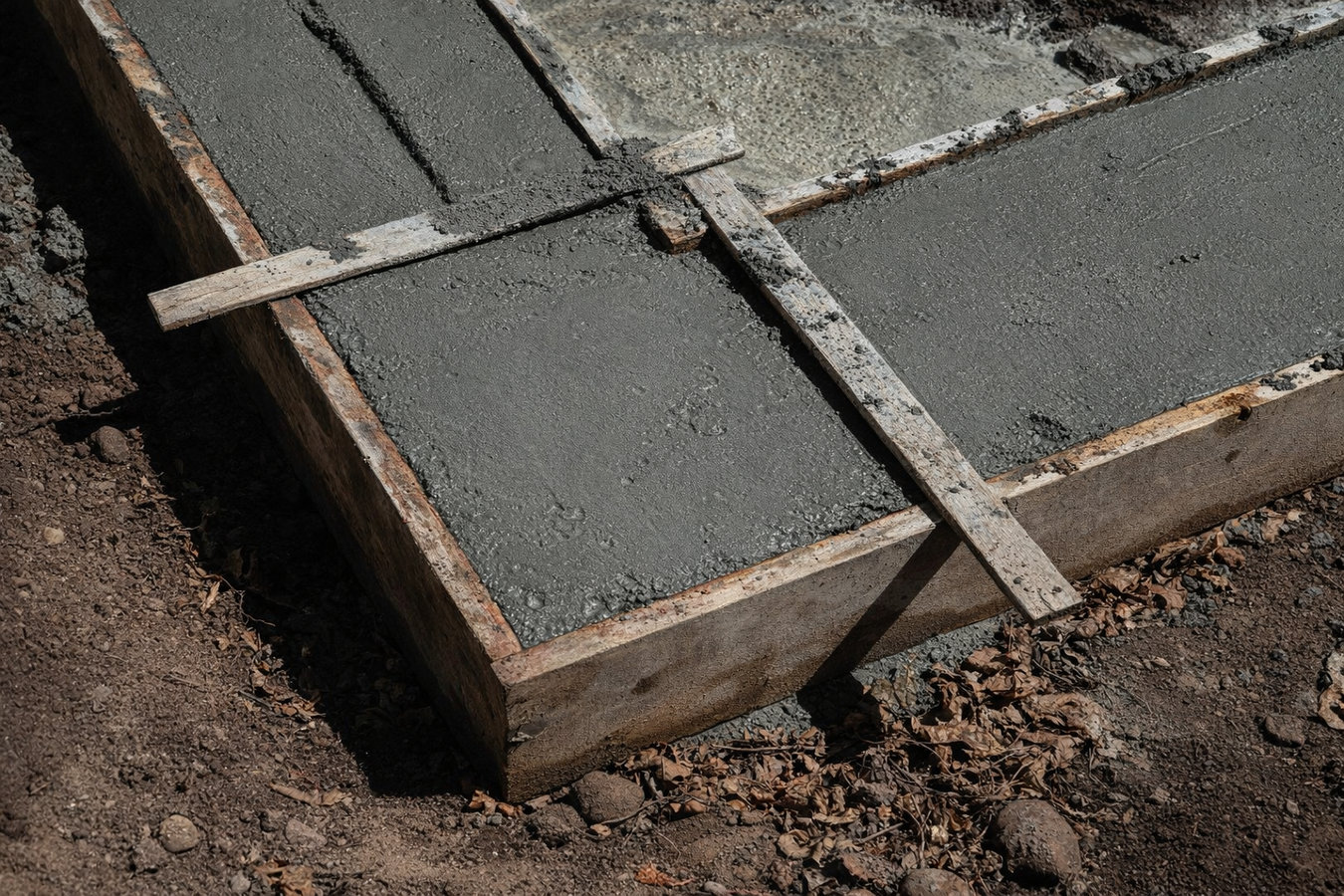
Slab foundation building in Windsor means pouring a reinforced concrete slab directly on prepared ground, typically for garages, additions, or new structures. Most residential projects take two to four days of active work after permit approval, with a curing period before building on top.
Windsor's glacially deposited soils vary a lot from lot to lot - sandy loam in one area, denser gravel in another, occasionally ledge rock. That variability makes proper base preparation more important here than in regions with uniform soil. A slab that looks good on day one but sits on a poorly compacted base will show problems within a few winters, when freeze-thaw cycles start working on any weak spots.
Many Windsor homeowners also need slab foundations as part of larger projects - expanding a 1960s ranch, adding a detached workshop, or building an accessory dwelling unit. If that sounds like your situation, you may also want to look at foundation installation for projects requiring a full basement below the frost line.
Any addition that sits on the ground - a new garage, a sunroom, an in-law suite - almost certainly needs a new slab foundation. This is the most common reason Windsor homeowners hire a concrete contractor for slab work, especially in neighborhoods where mid-century homes are being expanded.
Small hairline cracks in a concrete floor are often harmless, but cracks that are widening over time, or where one side sits higher than the other, suggest the ground underneath is shifting. In Windsor, this movement is often linked to the variable glacial soils beneath older properties - a sign the slab may need replacement rather than patching.
If water collects on your garage or basement slab after a rainstorm, or if you notice a persistent musty smell, the slab may have low spots or cracks letting moisture in from below. Windsor's wet springs and higher water table in some neighborhoods make this a particularly common complaint - and often means the original slab lacked adequate drainage beneath it.
If a home inspector or structural engineer has told you that your slab is settling in spots or pushing upward, that is a clear signal the foundation needs professional attention. In Windsor, heaving is sometimes caused by frost pushing up on a slab that was not built below the frost line - a problem that gets worse with each winter.
Most of our slab foundation work falls into two main categories: new construction slabs for additions, garages, and accessory structures, and replacement slabs for existing concrete that has settled, heaved, or cracked beyond repair. For new construction, we handle everything from permit application through final curing - including steel reinforcement sizing, gravel base compaction, and utility coordination if pipes or conduit need to run through the slab before the pour.
For homeowners planning longer-term structural projects, slab foundation work often pairs with concrete footings when the load requires a wider bearing surface below the slab edge. We walk you through which approach fits your project before any work begins.
Suited for detached and attached garages requiring a level, load-bearing slab with proper base preparation.
Ideal for homeowners adding livable square footage to an existing mid-century Windsor home.
Built to support in-law suites and accessory structures on residential lots with existing utility infrastructure.
Suited for new builds on vacant or previously undeveloped lots requiring full site prep and permit coordination.
Windsor sits in Hartford County and gets a full New England winter. Temperatures regularly drop below freezing from November through March, and the freeze-thaw cycle - dozens of swings between freezing nights and above-freezing afternoons - is one of the leading causes of slab damage in this area. Concrete poured in the wrong season, or without adequate curing protection, can be permanently weakened before the first spring arrives. Scheduling and curing management are not afterthoughts here - they are part of the job.
Windsor's housing stock adds another layer of local context. A large share of homes here were built between the 1950s and 1970s, and many of those properties are now being expanded or reconfigured - adding garages, converting outbuildings, or building accessory dwelling units. Those projects all need new slabs, often adjacent to aging utility lines and older drainage systems that need to be assessed before new concrete goes in. Homeowners in Bloomfield and Windsor Locks face similar conditions and are areas we serve regularly.
If your property is near the Connecticut River or in a low-lying area, the FEMA Flood Map Service Center lets you check your flood zone designation - which can affect how a slab needs to be designed and what your insurance requires.
We ask about your project size and lot conditions, then schedule a free on-site visit before giving you a written estimate. We reply within one business day and never quote a firm price over the phone without seeing your property.
Once you move forward, we apply for the Town of Windsor building permit on your behalf - a process that typically takes two to four weeks. We handle the paperwork and keep you informed on timing so your project does not stall waiting for approvals.
The crew excavates, levels, and compacts a gravel base tailored to your lot's specific soil conditions. If your ground has soft spots or drainage concerns - common in lower-lying Windsor neighborhoods - we address them before any concrete is ordered.
We set steel reinforcement, pass the pre-pour building inspection, then pour and finish the slab in one focused day. We protect the surface during curing and walk you through the control joints and next-step timeline before we leave.
We visit your lot, assess your soil conditions, and give you a written estimate. No phone guesses, no surprises on the invoice.
(860) 607-9919We apply for the required Town of Windsor building permit and schedule every inspection on your behalf before a shovel touches the ground. Your project goes on record as fully legal, which protects you at resale and when filing insurance claims.
Windsor's glacially deposited soils vary widely - dense gravel in one spot, softer sandy ground a few feet over. We assess the ground conditions on your property before compacting the base, so the slab you get on day one is still solid years from now.
We schedule pours between late spring and early fall and protect fresh concrete during curing with blankets or sheeting when temperatures are borderline. Connecticut's freeze-thaw cycles are hard on slabs that were not cured correctly, and we build that protection into every job.
You get a written, itemized estimate after an on-site visit - never a ballpark over the phone. We explain what is included and what could change the price if we find something unexpected in the ground. The Portland Cement Association recommends confirming all scope in writing before concrete work begins, and we follow that on every project.
The American Concrete Institute publishes the residential concrete construction standards that guide how slabs in Connecticut should be built, reinforced, and cured. We follow those standards on every project - not as a marketing point, but because they exist for good reason. A slab foundation is not something you want to rebuild in five years.
Full basement and crawl space foundations for new builds and additions across Windsor and Hartford County.
Learn MoreProperly sized and placed footings that spread structural loads and sit below Windsor's frost line.
Learn MoreSpring pour dates book fast in Hartford County. Call or send us a message now and we will get your estimate scheduled before the season fills up.