Loading...
Building a deck, addition, or garage in Windsor? Every permanent structure needs footings dug below the frost line - four feet in Connecticut - or Windsor winters will shift them out of position within a few years.
Concrete footings in Windsor, CT must be dug to at least four feet below grade - below Connecticut's frost line - before any concrete is poured, and most residential projects are complete within one to two weeks from first call to finished cured footing. Shallow footings in Windsor's climate heave out of position as the ground freezes and thaws, cracking whatever is built on top of them.
If you are planning a new deck, garage, or home addition, the footings are the first step and they set the timeline for everything else. A properly done footing project in Windsor requires a building permit and a town inspection before the concrete is covered - we handle both. Many homeowners also tie footing work into a foundation installation when planning a larger addition or new structure.
Call (860) 607-9919 or request a free estimate. We visit your site before quoting because Windsor's soils vary too much for a phone number to mean anything.
If a deck or porch is no longer level - one corner lower than the others, or a gap opening up where it meets the house - the footings underneath may have shifted. In Windsor's climate, this often happens after a series of hard freeze-thaw winters that gradually push shallow footings out of position. A tilting deck can become a safety hazard.
When a footing settles unevenly, the structure above shifts slightly - and that shows up in doors and windows that suddenly stick, jam, or no longer latch. If this is happening in a room that was added onto the original house, the footing under that addition may be the cause.
Cracks that run diagonally or in a stair-step pattern through concrete near a deck post, garage wall, or addition are often a sign that the footing below has moved. Windsor's freeze-thaw cycles are hard on concrete that was not poured deep enough, and widening cracks deserve a professional look.
Any new permanent structure in Windsor will require footings before anything else can be built. Getting the footing work scoped and permitted early is the right first step - it determines the timeline for everything that comes after. Spring slots fill up quickly in Windsor.
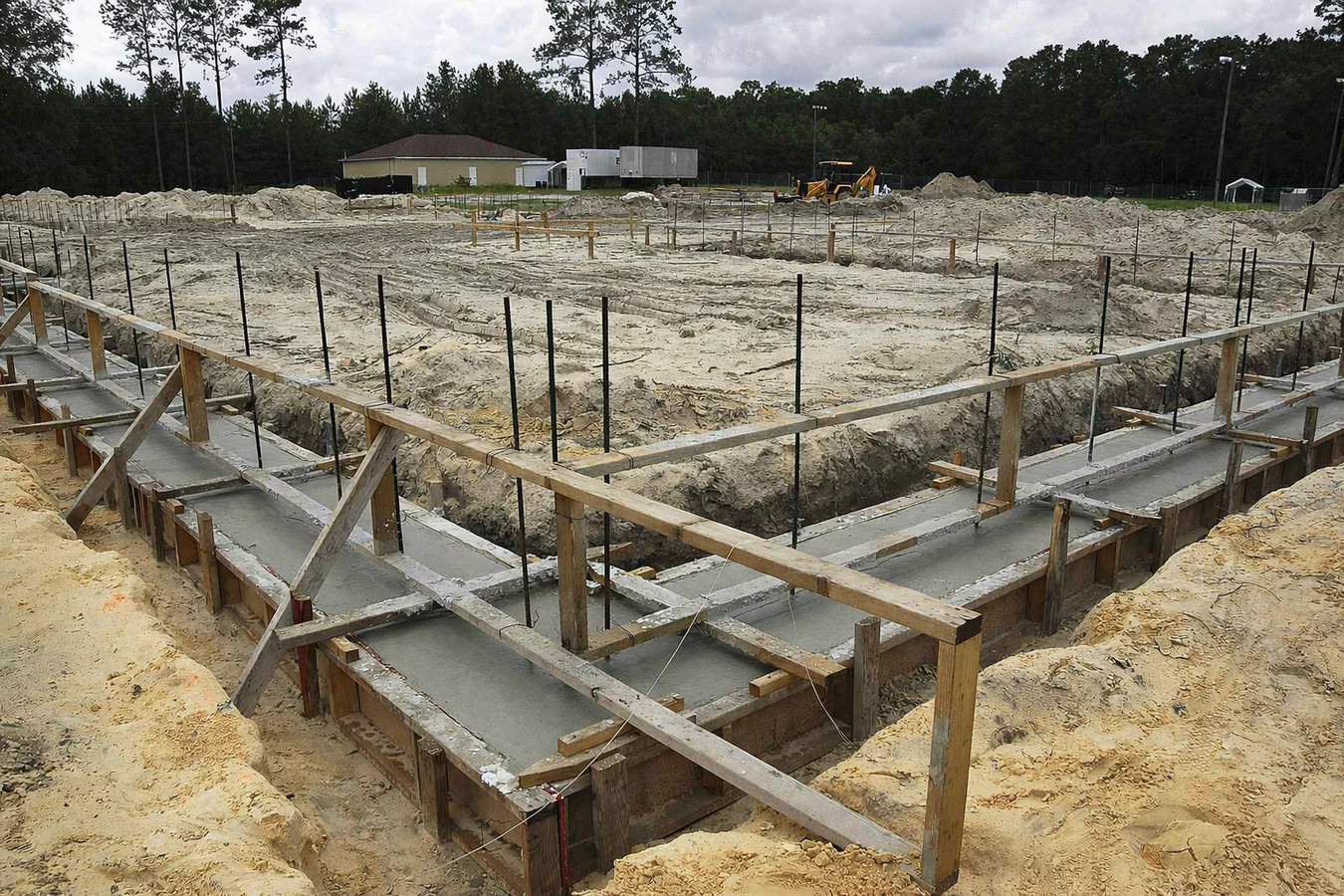
We dig, form, and pour concrete footings for residential projects across Windsor and Hartford County. Every footing goes in at Connecticut's required frost depth - at least four feet - and we apply for the Windsor Building Department permit before any digging starts. The town inspector confirms the depth before the concrete is poured, so you have an independent record that the work was done correctly - not just our word for it. For homeowners planning a full structural build, our footing work connects naturally to foundation raising and foundation installation projects.
Windsor's soils are a mix of sandy loam, gravel, and occasional ledge rock left behind by glacial activity - conditions vary significantly from one property to the next. We assess your specific ground conditions before quoting so that the price you agree to accounts for what is actually in the ground, not a best guess from the street.
Suited for homeowners building or replacing a deck - we dig to frost depth, set tube forms, and coordinate the town inspection before pouring.
Suited for home additions and detached garages where footings carry heavier loads and dimensional accuracy matters for the framing above.
Suited for covered porches, pergolas, and outdoor structures that need a proper below-grade base to stay level through Windsor winters.
Suited for older Windsor homes where mid-century footings were poured too shallow and need to be removed and replaced before rebuilding.
Connecticut requires footings to reach below the frost line - around four feet in Hartford County. That is deeper than many homeowners expect and deeper than warmer states require. Windsor has a significant amount of mid-20th-century housing stock where decks and additions were built before today's depth standards were consistently enforced. When those structures are rebuilt, the old footings often come out and new ones go in at the correct depth. Homeowners in Windsor rebuilding older decks should expect this conversation with their contractor - it is a normal part of the process here, not a surprise.
Windsor's location in the Connecticut River Valley also means glacially deposited soils that vary from one property to the next. In some yards the digging is straightforward sandy loam; in others, the crew hits ledge rock a few feet down. Homeowners in Bloomfield and the surrounding area face the same variability. This is why a site visit before quoting is not optional - it is the only way to give you a number you can actually budget around. See the Connecticut State Building Inspector for official frost depth and permit requirements.
We aim to respond within one business day. After a quick phone call to understand the scope, we schedule a site visit before giving you any price. Windsor's soil variability makes this step non-negotiable.
You receive a written estimate after the site visit covering digging, forming, concrete, and the permit fee. We file the Windsor Building Department permit before work starts - typically a few business days to a couple of weeks for approval.
The crew digs to frost depth - at least four feet - sets the tube forms, and places any required steel reinforcement. A town inspector visits to confirm depth and dimensions before the pour. This inspection is your independent proof the work is right.
The concrete is poured after inspection approval. Under normal conditions, footings reach working strength in about a week. We give you a clear timeline based on the season and conditions so you can schedule the next phase of your project with confidence.
Spring footing slots fill fast. We visit your site, handle the permit, and give you a written price before any commitment.
(860) 607-9919Connecticut's frost depth means every footing we pour in Windsor reaches at least four feet below grade. We do not quote shallow footings as an option to lower the price. Getting this right is the entire point of the job.
We apply for the Windsor Building Department permit before work begins and coordinate the inspector's visit before the pour. That inspection gives you a documented, independent confirmation that the depth and dimensions are correct - something you cannot get after the concrete is poured.
Windsor's glacially deposited soils vary from sandy loam to ledge rock within a single neighborhood. We visit your property and look at the ground before quoting. The price you agree to accounts for what is actually there, not a phone guess.
Windsor has a lot of homes built between 1940 and 1980 with older decks and additions that were footed at shallower depths. We regularly assess these situations and explain clearly whether the old footings can stay or need to come out. The National Association of Home Builders supports this kind of transparent, code-compliant approach to older residential work.
Once a footing is poured and buried, you cannot see it or fix it cheaply. Getting it right the first time - depth, dimensions, permit, inspection - is what separates a structure that stays level for 30 years from one that starts shifting in year three.
For Connecticut frost depth and permit requirements, see the Connecticut State Building Inspector. For contractor registration verification, see the Connecticut Department of Consumer Protection. Concrete quality standards are published by the American Concrete Institute.
Lifting and releveling existing foundations and structures that have settled or shifted over time.
Learn MoreFull foundation pours for new structures, additions, and garage builds requiring below-grade concrete work.
Learn MoreSpring slots fill fast - reach out now and we will visit your site, assess the ground, and give you a written estimate before the season books up.