Loading...
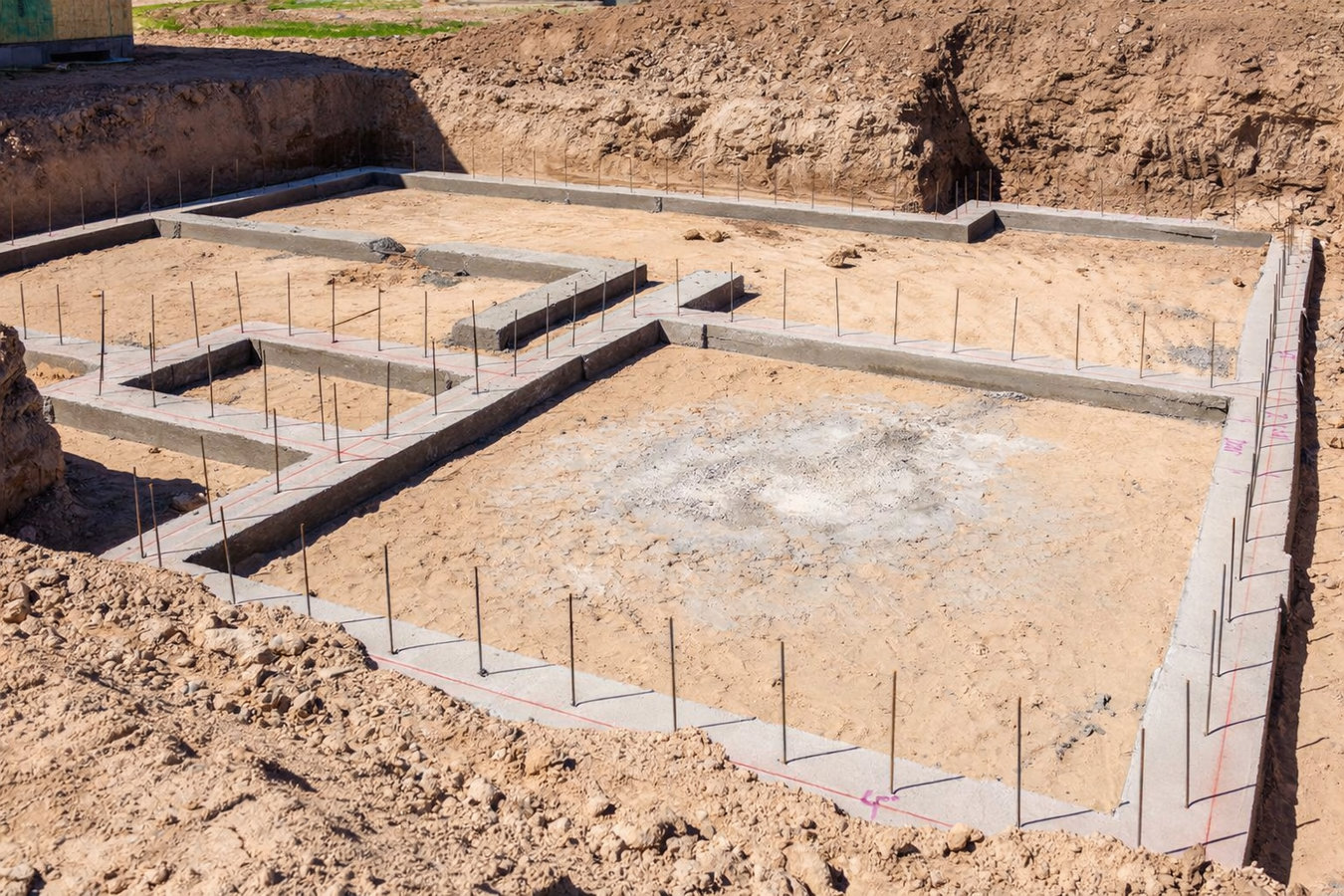
A foundation that moves in Windsor winters is a foundation built wrong. Get footings set at the right depth, waterproofing done before backfill, and every inspection passed.
Foundation installation in Windsor covers everything from excavation and footing placement to poured walls, exterior waterproofing, drainage, and permit-required inspections - a process that typically runs one to three weeks from the first day of digging to the point where framing can begin.
Windsor's deep frost line - the ground can freeze to roughly 42 to 48 inches in a hard winter - means every foundation here requires significant excavation. That is one of the reasons full basements are far more common in Windsor than in warmer states: if you have to dig down anyway to get below the frost line, many builders simply add usable space while they are at it. For additions and garages where a full basement is not needed, a slab foundation is often the right choice.
Windsor also has a large share of homes built between the 1940s and 1970s - many with original poured-concrete or concrete-block foundations that are showing their age. Foundation replacement on those properties is more involved than a new build, and it requires a contractor with specific experience in temporary shoring and working around older utility infrastructure.
Small hairline cracks in a concrete wall are common and often harmless. But if you have noticed a crack getting longer or wider - especially one running diagonally from a corner or horizontally across a wall - that is a sign the foundation is moving. In Windsor's older homes, this kind of movement often traces back to foundations poured before modern standards required deeper footings or proper drainage.
When a foundation shifts, the frame of your house shifts with it. If interior doors now stick at the top or bottom, or if you can see daylight around a window frame that used to seal tight, the house may be moving below. This is especially worth noting if the sticking started or got worse after a wet Windsor spring - a common pattern given the area's clay soils and seasonal moisture.
If you find water on your basement floor after heavy rain or during the spring thaw, your foundation walls may have cracks or gaps, or the original waterproofing has failed. Windsor's wet springs and the pressure saturated soil puts on foundation walls make this a common complaint in homes built before the 1980s. Water in the basement damages framing, encourages mold, and weakens the structure over time.
If a room's floor dips toward the center or feels springy in a way it did not before, the issue may be below the floor - a settling foundation or posts and beams no longer properly supported. What starts as a minor settling issue can become a major structural repair if ignored, especially in Windsor's older colonial and ranch-style homes.
We install full basement foundations, crawl space foundations, slab-on-grade foundations, and replacement foundations for Windsor homes and additions. Every project starts with an on-site assessment - we look at your soil conditions, lot slope, existing utility placement, and what the structure above needs before we recommend a foundation type. The type of foundation that is right for a new colonial on a flat lot is not necessarily right for an addition on a sloped lot with clay-heavy soil.
Waterproofing and drainage are part of the job, not add-ons. Before the soil goes back against the walls, we apply exterior waterproofing and install drainage around the footing. This is especially important in Windsor neighborhoods with slower-draining soils. For commercial or multi-bay projects, our concrete parking lot building work follows the same foundation and drainage principles scaled to a larger footprint.
The most common choice in Windsor, suited for new builds and additions where usable below-grade space is a priority.
Suited for properties where a full basement is not practical but the structure needs ventilated space below the floor.
Suited for garages, additions, and accessory structures where below-grade space is not needed.
For Windsor's older mid-century homes with failing poured-concrete or concrete-block foundations that need full replacement.
Windsor's soil is not uniform. The town sits at the confluence of the Connecticut and Farmington Rivers, and the result is a mix of well-drained sandy loam near the river floodplain and heavier, clay-rich soils in other neighborhoods. Clay soil holds water and expands when wet, which puts sustained pressure on foundation walls over time. A contractor unfamiliar with Windsor's soil variability may not adjust their drainage design to account for what your specific lot actually has - and the consequences show up years later as water infiltration and wall movement.
The seasonal window for foundation work here is real. The spring thaw - roughly March through April - can leave the ground saturated and unstable. Pouring concrete into waterlogged ground creates quality risks that are not visible until well after the project wraps up. We schedule foundation work from late spring through early fall and pull permits early so there is no administrative delay once the ground is ready. We work regularly in Hartford and Bloomfield, which share Windsor's soil conditions and frost depth requirements.
For questions about Connecticut building requirements for foundation depth and waterproofing, the Connecticut Office of State Building Inspector publishes the state building code requirements that govern this work.
We ask about your project, visit your lot, and give you a written estimate after seeing the ground conditions and access. We reply within one business day and never provide a firm price over the phone - your soil conditions and lot slope both affect the cost significantly.
We apply for the Town of Windsor building permit before any digging begins - a process that typically takes a few weeks. We handle the paperwork and keep you updated so your project does not stall waiting on approvals.
The crew excavates to the required depth, pours the concrete footings below Windsor's frost line, and allows them to cure before the foundation walls go up. If your existing home needs temporary support during the work, we set that up before anything is disturbed.
Foundation walls go up, then exterior waterproofing and drainage are installed before any soil goes back in. A town inspector verifies the work at required stages. We grade the ground to slope away from the house and leave the site ready for the next phase of your project.
No pressure, no obligation - just a clear written quote so you can compare your options with confidence. We respond within one business day.
(860) 607-9919Windsor's ground can freeze to 42 to 48 inches in a hard winter. We size and place footings below that depth on every project so the freeze-thaw cycle cannot push your foundation out of position. It is one of the most important details in foundation work here, and we do not cut corners on it.
We apply for the required Town of Windsor building permit and schedule every required inspection before and after the pour. Your project goes on the public record as fully legal - which matters when you sell the home or file an insurance claim years from now.
Windsor's wet springs and clay-heavy soils in many neighborhoods mean foundation walls face real moisture pressure season after season. We apply exterior waterproofing and install drainage around the footing before backfill - because fixing a wet basement after the soil goes back in is far more expensive than doing it right the first time.
A significant portion of Windsor homes were built between the 1940s and 1970s, and foundation replacement on those properties is more complex than new construction - the house has to be temporarily supported during the work. We have done this type of project in Windsor and nearby Hartford County towns and understand what it involves.
The National Ready Mixed Concrete Association represents the producers who supply the concrete used in foundation work across Connecticut. Contractors who source from quality suppliers are working with concrete mixed to consistent specifications. Combined with proper installation and permitted inspections, that is what separates a foundation that lasts from one that gives you problems within the first decade.
Commercial and residential concrete lots designed for Windsor's freeze-thaw conditions and heavy traffic loads.
Learn MoreReinforced concrete slabs for garages, additions, and accessory structures across Windsor and Hartford County.
Learn MoreWindsor's best foundation crews book up fast once the ground thaws. Call or send us a message now and we will get your estimate scheduled before the spring rush.