Loading...
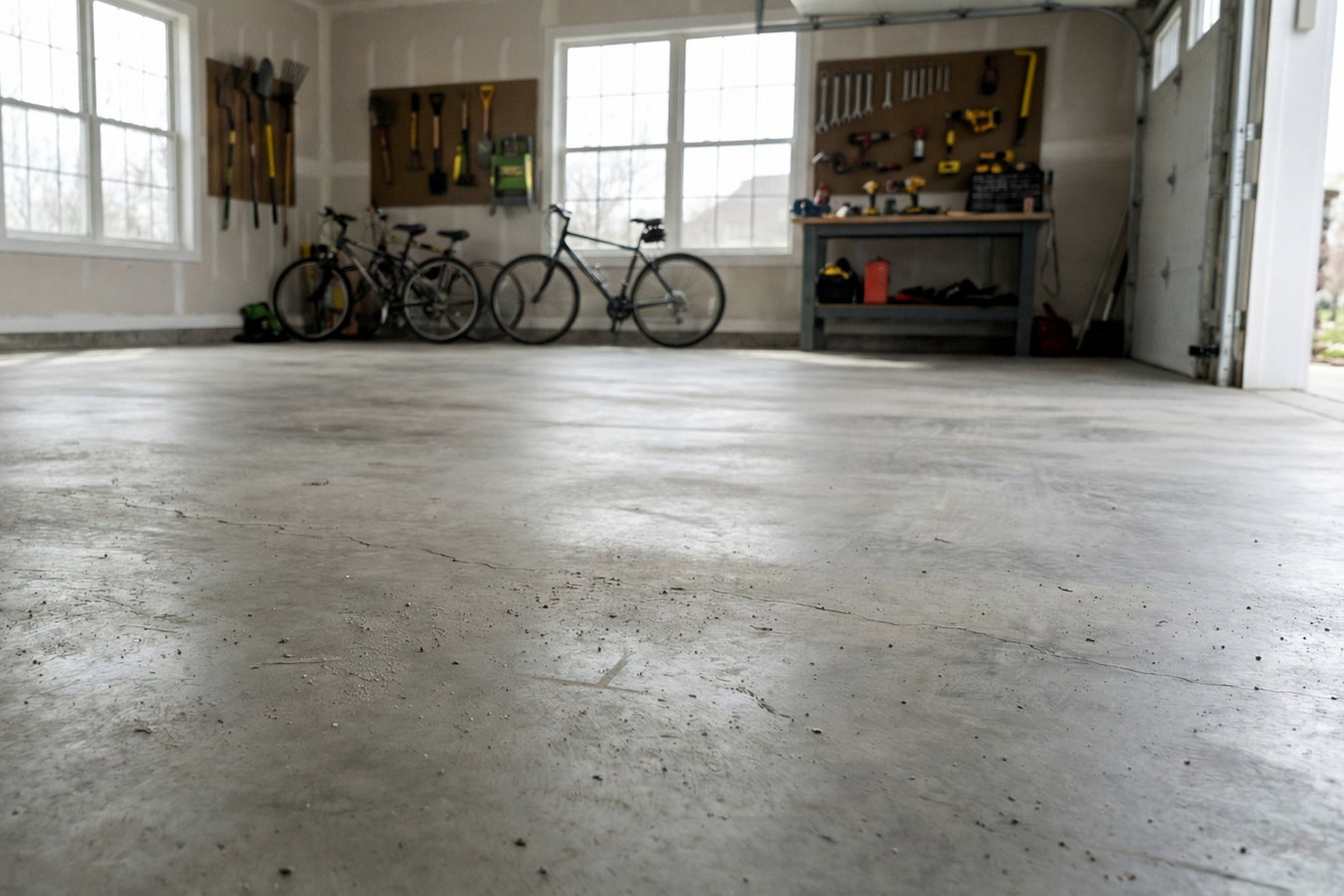
Your garage floor takes a beating every winter. Cracking, flaking, or pooling water are signs your slab is overdue. We pour floors built specifically for Connecticut conditions - proper base, correct thickness, sealed surface.
Garage floor concrete in Windsor, CT means removing your old slab, preparing the base, and pouring a new surface built to handle Connecticut winters - most residential garage jobs take one to three days of active work, with a seven-day wait before you can drive on it again.
Windsor homeowners deal with a double threat: freeze-thaw cycles that crack slabs from below, and road salt tracked in every winter that breaks down the surface from above. If your floor is flaking, shifting, or collecting puddles, those are signs the original pour was not built to last in this climate. A replacement done right addresses both problems - not just the surface, but the ground underneath it.
If your garage project is part of a larger effort to update your outdoor spaces, we also do decorative concrete work that can carry the same look from your garage to your driveway or patio.
Hairline cracks are common in older concrete and do not always signal trouble. But if a crack is wider than a quarter-inch, or if one side sits higher than the other, the slab is shifting - and patching will not fix it. In Windsor, the freeze-thaw cycle working on the soil underneath is the most common cause of this kind of movement.
If your floor is shedding thin chips or has a rough, cratered texture where it used to be smooth, the surface layer is breaking down. This is common on Windsor garage floors where road salt has been tracked in repeatedly without a sealer protecting the concrete. Once spalling starts it tends to spread - resurfacing or replacement is usually the right call.
A properly poured garage floor slopes slightly toward the door or a drain. If puddles form in the middle or back of your garage after a wet day, the floor has settled unevenly or was never graded correctly. Standing water accelerates concrete damage and works its way under the slab, making the problem progressively worse.
A significant share of Windsor homes were built between 1950 and 1980, meaning many original garage floors are now 40 to 70 years old. Slabs from that era were often poured thinner than today's standards and without modern fiber reinforcement. If your home was built before 1990 and the original slab is still in place, it is worth a contractor taking a look.
We handle full garage floor replacements from start to finish. That means demolishing and hauling away the old slab, compacting the soil base, adding gravel for drainage, setting forms, and pouring to the right thickness for your use - four inches for a standard passenger vehicle garage, five or six inches if you store heavy equipment or commercial vehicles. We also do concrete floor installation for interior spaces beyond the garage when the project calls for it.
If your existing slab is structurally sound but worn, pitted, or stained, resurfacing may be a more cost-effective path. We assess your slab during the estimate visit and tell you honestly which option makes sense. Every job finishes with a sealer applied to protect the surface through Windsor winters - that step is not optional on our end.
Best for slabs that are cracked, heaving, or draining improperly - we remove the old concrete and pour a new slab from scratch.
Suited for structurally sound slabs with surface wear, staining, or minor spalling - a new layer restores the look at lower cost.
A light broom texture adds grip so the floor is not slippery when wet from rain or snowmelt - the right choice for garages in snowy climates.
For homeowners who plan to add an epoxy coating - we pour and cure the slab to the prep standards epoxy requires so the coating bonds properly.
Windsor experiences roughly 100 or more freeze-thaw cycles per year. That constant back-and-forth - ground freezing, thawing, and freezing again - puts stress on concrete slabs from below, and it is the leading cause of cracking and heaving in local garage floors. On top of that, state-maintained roads in Windsor are heavily salted from November through March, and that salt rides into garages on tires and boots every day of winter. Without a sealed surface, the combination of freeze-thaw movement and salt exposure is what turns a five-year-old floor into a crumbling mess.
Windsor also has a significant share of homes built between 1950 and 1980. Many garage floors from that era were poured thinner than current standards and without the fiber reinforcement or gravel base drainage that modern pours include. Homeowners in neighborhoods like Bloomfield and South Windsor with mid-century homes often find that patching has stopped working and the whole floor needs to come out.
Tell us the garage size and what you are seeing - cracks, puddles, surface flaking, or all three. We reply within one business day to set up a free on-site visit, because slab condition and soil underneath can change the scope significantly.
We walk the floor, check for shifting, assess drainage, and talk through your finish options - plain concrete, broom texture, or an epoxy-ready surface. You get a written estimate that covers demolition, base prep, the pour, and cleanup - no line items added later.
We clear the old slab, haul away debris, compact the soil, and add gravel before a single bucket of concrete is mixed. Pour day for a standard two-car garage typically takes four to six hours of active work. Your garage will be off-limits for 24 to 48 hours after.
Foot traffic is fine after 24 to 48 hours. Vehicles stay off the floor for seven days. We do a final walkthrough with you before we close out the job, and we apply sealer at the right point in the cure cycle to protect your new floor through the first winter.
Free estimate, written quote, no obligation. We reply within one business day.
(860) 607-9919We compact soil and grade a gravel base on every job - not just the ones that look soft. In Windsor's freeze-thaw climate, skipping this step is how a new floor develops the same cracks as the one we just removed. The Portland Cement Association recommends proper subbase preparation as the single most important step in slab longevity.
Portland Cement AssociationYour estimate spells out demolition, base work, concrete thickness, finish type, and cleanup. What is in the estimate is what you pay - no vague line items, no surprises when the invoice arrives. If conditions on pour day turn up something unexpected, we call you before we proceed.
Every garage floor we pour gets sealed. In a climate where road salt and freeze-thaw cycles attack unprotected concrete every winter, leaving a new floor unsealed is a guarantee of early surface failure. We treat sealing as part of the job, not an optional add-on with a separate invoice.
A large share of Windsor homes were built between 1950 and 1980, and the garage floors from that era often have undersized bases and no drainage grading. We know what to look for when we pull an old slab out, and we correct those original deficiencies so the new floor does not repeat the same failure mode.
Every one of those points comes back to the same thing: a garage floor that works the way it should and does not need to be dealt with again in five years. That is the only outcome we are interested in delivering.
Add color, pattern, or texture to your garage floor or outdoor surfaces beyond a plain gray slab.
Learn MoreFull concrete floor pours for interior spaces including basements, workshops, and utility areas.
Learn MoreSpring and fall book fast in Windsor. Reach out now to get on the schedule before the best weather windows fill up.